Back
BackResource-Driven Bio-Manufacturing: Integrative Strategies for Living Architecture in Extreme Environments
We’re excited to share a new research commencing in April 2026!
Dr. Monika Brandić Lipińska was awared a UIBK FemCarrer Fellowship for her research
titled Resource-Driven Bio-manufacturing: Integrative Strategies for Living Architecture in Extreme Environments, with Prof. Barabra Imhof as a mentor.

Monika completed her PhD at the Hub for Biotechnology in the Built Environment at Newcastle University, in collaboration with NASA Ames Research Center, where she researched biological approaches to building habitats on Mars, including the development of low-biomass mycelium–regolith construction composites. She holds an MSc in Architecture from Lund University and an MSc in Space Studies from the International Space University, and has professional experience across Europe, the US, the UK, and Japan. Her work explores how architectural design, in-situ resource utilisation, biotechnologies, and living materials can shape resilient habitats that support human well-being in extreme and resource-limited environments.
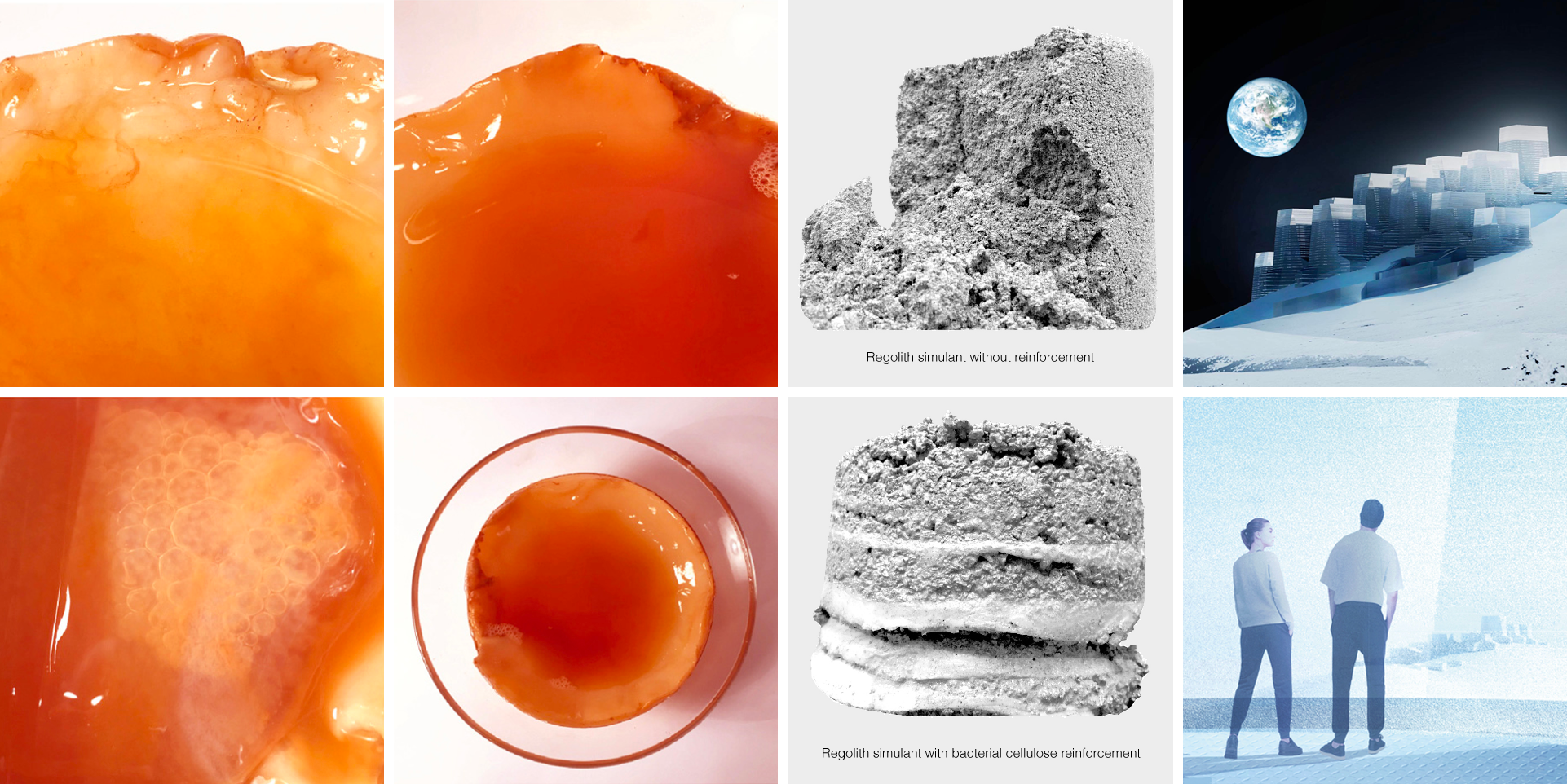
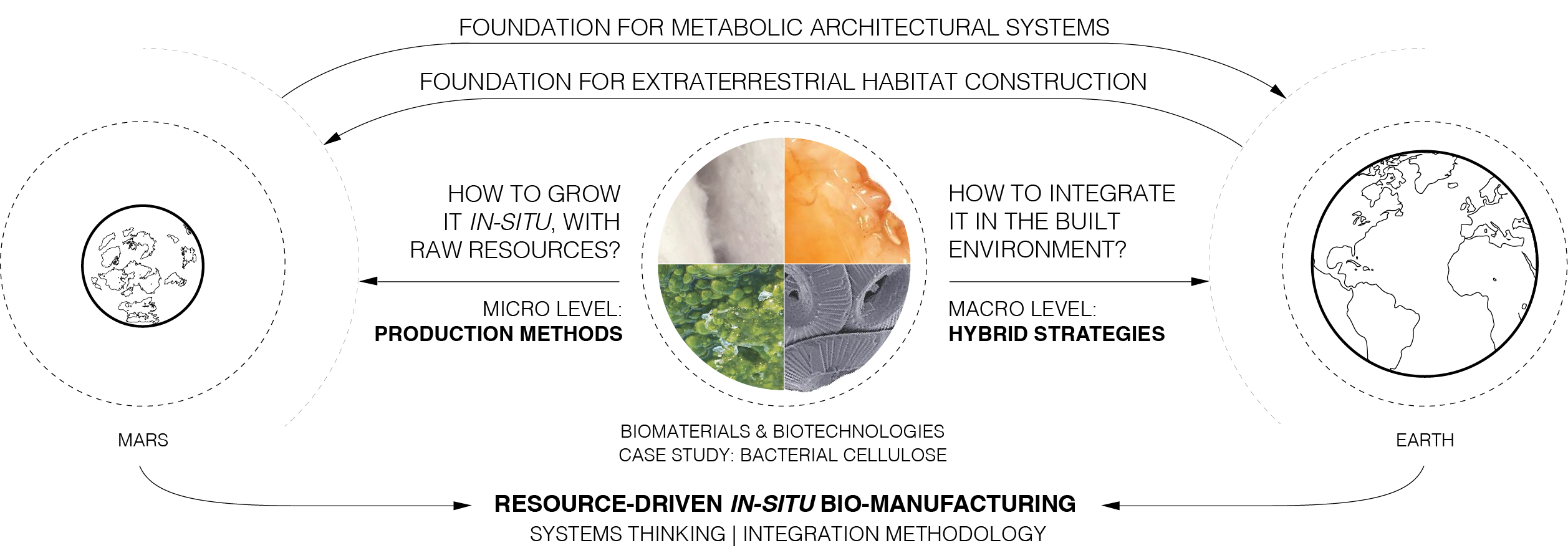
The Resource-Driven Bio-manufacturing research explores in-situ biomanufacturing strategies inspired by space exploration, with Mars serving as a critical testing ground for rethinking construction under extreme constraints. During her fellowship, Monika will explore how biological materials – specifically bacterial cellulose – can be produced using locally available and habitat-derived resources on Mars, and integrated into hybrid architectural systems. By focusing on resource availability, scalability, and systems-level design, the project aims to develop new frameworks for bio-integrated, regenerative architecture with relevance both for extraterrestrial habitats and for climate-resilient construction on Earth.
The fellowship enables close collaboration across disciplines at UIBK, including experimental architecture, microbiology, and materials technology, as well as international partnerships with leading research institutions in biotechnology and in-space manufacturing. Beyond advancing fundamental research, the project will contribute to teaching, prototyping, and public engagement activities at the intersection of architecture, biology, and extreme environments.
Funding provided by the Vice-Rectorate for Research at the University of Innsbruck.