Back
BackMETABOLIC TERRITORIES / LIVING INTERFACES
STUDIO DESCRIPTION
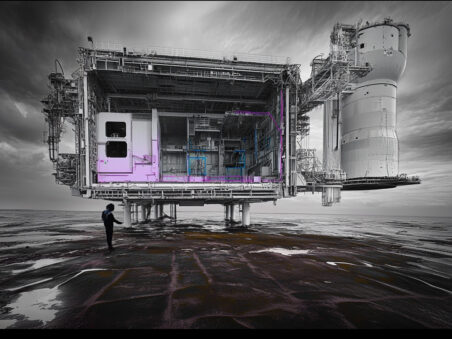
This studio addresses the habitation problem in Innsbruck and treats habitation as a shared metabolic system. Students will work together to design a single architectural “organism” composed of interdependent spatial fragments that must exchange resources, conditions, and functions to support life.
Each group is assigned a tile within a larger structure and a living function essential to everyday life – such as eating, resting, hygiene, (active)wellbeing, working, or gathering. Each tile has specific environmental conditions, resources, constraints, and opportunities. Rather than designing a complete building, students explore/investigate what their assigned function requires: air, light, heat, water, rest, privacy, movement, care. These metabolic requirements, together with tile-specific conditions, become the drivers of architectural form, space, and material systems.
The studio operates as a form of collective world-building. Like constructing a shared game environment, students work within a set of given parameters, but have full agency in how they develop their spatial strategies. No tile is complete on its own. The living system emerges through adjacency, overlap, and negotiation with neighbouring tiles. Environmental systems cross boundaries, functions depend on one another, and spatial decisions have collective consequences.
Architecture is explored as an integrative design process in which living functions, metabolic systems, and spatial organization are developed together. Environmental performance, material and construction logic, and social patterns of inhabitation are treated as inseparable. The result is a shared architectural organism whose form and performance emerge through collaboration, dependency, and negotiated adjacencies rather than isolated objects.
In this studio, students design architecture as a shared living system. Each group is assigned one spatial tile within a larger architectural organism and one living function essential to habitation.
Each group will:
• Understand the dominant environmental conditions of their tile.
• Translate these conditions into spatial strategies and architectural responses.
• Understand the social and spatial meaning of their assigned living function.
• Identify the metabolic requirements that support this function.
• Develop architectural systems that respond to these needs.
• Negotiate adjacency and interdependence with neighbouring tiles.
Architectural living system emerges not from individual projects, but from exchange, overlap, and negotiation between systems.
STUDIO STRUCTURE
PHASE 1: Elements of Connection
This phase is a short, intensive workshop focused on architectural elements of connection. Students collectively explore how architecture connects, overlaps, and integrates through spatial elements such as bridges, corridors, galleries, terraces, staircases, ramps, shared thresholds, or overlapping spaces. The aim is to understand how these elements mediate movement, light, air, structure, and social interaction, and to establish a shared vocabulary of adjacency and collective design principles.
Output: Moodboards and reference collages, adjacency diagrams and connection maps, sectional studies, catalog of connective elements, preliminary rules of adjacency.
PHASE 2: Tile and Function
The connective logic is grounded in a specific context and living function. Students work in pairs and are assigned a fixed tile within the project site, each with predefined environmental conditions. In parallel, each group is assigned a living function essential to habitation (e.g. eating, resting, working, gathering, care) and investigates it as a metabolic process, identifying its spatial, environmental, and social requirements. The key task is to synthesize tile conditions and functional metabolism into clear architectural drivers.
Output: Research booklet including site analysis diagrams, tile condition maps, function narratives, metabolic diagrams, precedent atlas, SWOT analysis, adjacency and system dependency diagrams.
PHASE 3: Spatial Integration
System logic, site conditions, and living functions converge into architectural design. Students translate metabolic requirements into spatial, material, and environmental strategies within their tile, while continuously negotiating with adjacent projects. Boundaries are treated as shared interfaces, where circulation, climate, and program must align. No project is considered complete unless it functions as part of the collective organism.
Output: Working models, plans, sections, system diagrams, adjacency studies, material and environmental strategies.
PHASE 4: Collective Assembly
All tiles are assembled into a single architectural organism. The project is tested and refined at both local and collective scales to evaluate spatial continuity, functional integration, and overall habitability.
Output: Final architectural project, shared physical model, coordinated drawings, collective system diagrams.
METHODS
The studio combines group-based responsibility with collective design decision-making. While each group is assigned a specific tile and a living function, the architectural system is developed collaboratively from an early stage.
Initial phases allow groups to work independently on analysis, research, and system definition, enabling depth, specificity, and ownership. Very early in the semester, however, the studio shifts into a fully collective working mode: desk crits and reviews are conducted with all students present (including peer-crits, students giving feedback and commentary), and projects are discussed not as isolated proposals but as interdependent parts of a single architectural organism. Design decisions are evaluated not only for their individual quality, but for their impact on adjacency, environmental exchange, spatial continuity, and the performance and habitability of the whole system.
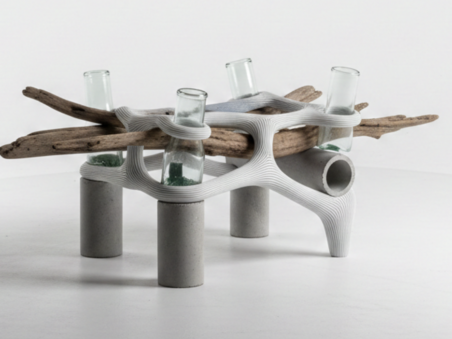
To enable this collective process, students work with shared modeling scales, drawing conventions, and representation standards. Physical models play a central role in testing spatial relationships, system integration, and continuity across tiles. Difference and specificity between projects are encouraged; however, all designs must remain compatible and assemblable, both spatially and representationally. Elements such as floor levels, ceiling heights, circulation paths, and environmental systems must align across tile boundaries to allow movement, exchange, and shared use.
Additionally, representation is treated as a design method in itself: a tool to coordinate systems, align intentions, and make collective decisions visible. Through this process, the studio reflects real-world architectural practice – particularly in complex or extreme environments – where architecture is produced through collaboration between multiple teams, disciplines, and systems rather than in isolation.
LITERATURE
1. A Pattern Language, Christopher Alexander
2. Investigations in Collective Form, Fumihiko Maki
3. Metabolism in Architecture, Kisho Kurokawa
4. The Architecture of the Well-Tempered Environment, Reyner Banham
5. Architecture climatique, Philippe Rahm
6. The Eyes of the Skin, Juhani Pallasmaa
7. A Topology of Everyday Constellations, Georges Teyssot
8. The Architecture of Closed Worlds, Or, What is the Power of Shit?, Lydia Kallipoliti
9. Operating Manual for Spaceship Earth, Buckminster Fuller
10. Elements of Architecture, Rem Koolhaas
11. The image of the city, Kevin Lynch
The studio will be taught mainly on Thursdays and in English.